Literature Fiend

Every book changes your literary journey.

Page 4 of 4

The Goldfinch by Donna Tartt

imgresI’ve been thinking about what to write since I finished Tartt’s masterpiece a few weeks ago. An epic work which weighs in at 864 pages, which I really loved reading.

The length of The Goldfinch may put some people off; but the investment is well worth the effort.

Throughout the novel the themes of loss and friendship are dealt with on so many different levels; too many to mention in this short review.

It follows Theo Decker from childhood to adulthood, after the loss of arguably the most important figure in his life – his mother. Theo sort of imprints the memory of his mother onto a painting he steals after a terrorist attack on the Metropolitan Museum of Art, his mother’s favorite painting, I might add. Worried about what the authorities will say (as Theo ponders coming clean) the painting sparks an obsession, and not just for the protagonist.

It is important to point out that the painting of The Goldfinch by Carel Fabritius, is a truly remarkable piece of art asimgres you can see from the image on the right. It is said to be one of a dozen surviving works by the Dutch Artist; many of which were lost when his studio was destroyed by the explosion of the Delft gunpowder magazine on October 12, 1654. Fabrititus – a pupil of Rembrandt – died in this explosion aged 32.

Tartt’s novel is full of memorable characters, apart from Theo. For me, I really enjoyed the lifelong friendship with Boris – a Ukrainian with so much depth to his personality – and was really touched by their relationship, not to mention their crazy adventures.

In this section of the novel Boris talks to Theo about girls:

“Here is my experience. Stay away from the ones you love too much. Those are the ones who will kill you. What you want to be happy in the world is a woman who has her own life and lets you have yours.” (p. 667)

And who can forget Hobbie, the furniture restorer who I imagined for some reason to be a blood relative of the BFG; but more than that,  he is a simple character, more than content spending his days in his workshop restoring furniture – I really admired this about him.

The writing style is typically beautiful. However, there is a section in the last third of the book when Theo is contemplating his own mortality and whether he should continue to live. The descriptive quality and somber subject matter is well captured. I mean throughout this section the “Black Mood” was transferred from the page and really affected me to the extent that I had to put the book down on a regular basis; it seemed to suffocate me.

Depression is a theme that is re-visited throughout the novel. In this passage Theo describes the difficulty of living a normal life after tragedy:

“…and though the darkness sometimes lifted just enough so I could construe my surroundings, familiar shapes solidifying like bedroom furniture at dawn, my relief was never more than temporary because somehow the full morning never came, things always went black before I could orient myself and there I was again with ink poured in my eyes, guttering around in the dark” (p. 573)

I’m not surprised that The Goldfinch won the Pulitzer Prize for Fiction in 2014 and unlike other reviews I’ve read I don’t care it was a decade in the making. Tartt openly admits that she’s a slow writer, but the descriptive detail and depth of research really does help to  pack a punch.

And you know what? I’m happy to wait another ten years if I get to read something as well crafted as The Goldfinch again.

See you in 2024 Tartt. It’s a date!

To Build a Fire by Jack London

imgres


For my next read, I’ve been working my way through The Goldfinch by Donna Tartt. So far, I’m about half way through; so to bridge the gap I thought I’d start reading online short stories at work (yes, while I’m getting paid for it – great huh!)

So I entered “online short stories” into Google and To build a fire by Jack London was one of the first. I must confess that I’ve never read any London, but this had me hooked right from the beginning.

It’s about a man walking through the icy Yukon trail with his dog; the dog is immediately aware of the danger of traipsing through the wilderness in this climate:

“The dog did not know anything about temperatures. Possibly in its brain there was no understanding of a condition of very cold, such as was in the man’s brain. But the animal sensed the danger.”

I really liked the way London makes you identify with the dog, as if it should be he who was the master over the man. This can be seen in the way the man is first described:

“The trouble with him was that he was not able to imagine. He was quick and ready in the things of life, but only in the things, and not in their meanings. Fifty degrees below zero meant 80 degrees of frost.”

The man who, as a newcomer in this part of the world ignores the advice of the locals; that any hike in the icy weather should be done as a pair. It isn’t long before the man, who is making good ground (and getting a little cocky) accidentally submerges his foot in the freezing water.

Due to the temperature, the man needs to light a fire to thaw his body before continuing on his journey. But alas, his hands are frozen. The rest of the story focusses on the mans fight between life and death.

Does he make it? Read it here, It’s a very well written, quick read!!

Best part

I really like the advice given at the beginning by an old man well versed in the climate of that region. The advice is re-visited throughout the story:

“He remembered the advice of the old man on Sulphur Creek, and smiled. The man had been very serious when he said that no man should travel alone in that country after 50 below zero.”

Wait Until Spring Bandini by John Fante

Wait-Until-Spring-Bandini


I was so impressed by Ask the Dust, that I went straight to Amazon and ordered the “Bandini Quartet.” It has the four novels: Wait Until Spring Bandini, The Road to Los Angeles, Ask the Dust and Dreams from Bunker Hill.

It works out much cheaper than buying them separately, and if you want to read them all – which after reading one Fante novel, trust me you will – is well worth the investment.

In this novel we get an insight into what things were like for Arturo Bandini (or Fante, however you want to look at it) as a child. And the answer is pretty bleak; the family are poor – like most during the depression era – and constantly struggling to pay their food bill at the local shop, let alone the rent.

Arturo – in typical fashion – has his mind consumed with a girl from his school, Rosa. She however, doesn’t reciprocate his feelings:

“Rosa, his girl. She hated him, but she was his girl. Did she know that he loved her? Was that why she hated him? Could she see the mysterious things that went on inside him, and was that why she laughed at him?” (p.42)

Svevo,Arturo’s Father, is a bricklayer and hates the winter; he is constantly being “rained off” as we say in England, due to bad weather. He is ashamed that he cannot bring more money into the household; in the first few pages we see these worries as he walks into:

“…the yard of his house that was not paid for..” (p.8) and  to his “…house that was not paid for” (p.7).

On the other hand his wife is a deeply religious woman, rich, in the sense that she makes the home a home. She is described as angelic and despite the lack of money, the love in the household is strongly felt:

 “Maria had a white rosary, so white you could drop it in the snow and loose it forever” (p.7). 

The routine of the Bandini household is torn apart – partly through miscommunication and partly through the local rumors in the neighborhood, when Svevo goes to work for the rich widow Hildegarde to earn money for his family. It is his pride that obstructs his true feelings:

“Bandini sobbed – a grown man, forty-two years old, weeping because it was Christmas Eve and he was returning to his sin, because he would rather be with his children” (p.137)

Through the use of a omniscient narrator the reader can identify with every character at one stage or another; this way their love, thoughts and feelings towards each other really shine through. That said,  I much preferred the first person narrative (from Arturo) in Ask the Dust, which made me laugh out loud on many occasions.

This novel, is an excellent piece of writing; which is poetic throughout, not to mention heartbreaking at times. The more Fante I read the more I begin to understand the term “way ahead of his time” because if it wasn’t for the popularity of Bukowski we may have seen Fante’s work buried deep in dark attics and second hand bookshops.

And that my friends, would be a tragedy in my eyes.


Best Part

Arturo is trying to be a little more “saintly”,  but for reasons I’ll not reveal he lashes out in frustration. He is in his garden when:

“He [Arturo] found a lump of coal the size of his fist, stood back and measured his distance. The old brown hen nearest him got the blow in the neck as the whizzing lump all but tore her head loose and caromed off the chicken shed” (p.46)

This was a harsh act, but the reason I liked it so much is that a few pages later the hungry family are tucking in to a succulent roast chicken.


Rating: 7/10


Ask the Dust by John Fante

“I didn’t ask any questions. Everything I wanted to know was written in tortured phrases across the desolation of her face.”


d449cb3a4cd787f53929a4bf2389e815John Fante came into my life as part of my Charles Bukowski addiction.  Both of these writers appeal to me because of the rawness in their writing.

It captures truth, beauty and simplicity. A little like Steinbeck and Hemingway, but not as literary.

Fante’s fictional works were all but out of print until Bukowski created a resurgence in popularity in the late 70’s. There are four books that document the life of Fante’s semi-autobiographical character, Arturo Bandini – now know as the Bandini Quartet.

“I AM ARTURO BANDINI!”

Ask the Dust is a really funny novel. Bandini writes a short story that is published, but blatantly ignored by the people around him (even though he is always self promoting it.) It’s evident from the beginning that he isn’t as popular as he thinks. There is a nice little scene when he first meets his landlady and shows her his short story in a magazine; a few moments later she asks for his name. Bandini says:

“…And I was disappointed, for already she had forgotten the author of The Little Dog Laughed and his name printed in large type on the magazine” (Ask the Dust, p. 51).

There are funny bits like this throughout the book. When Bandini meets Camilla Lopez – a waitress – his life takes a number of twists and turns. It’s a kind of love hate relationship, that just never seems to go smoothly.

Ask the Dust, documents how Bandini, although a good writer never really gets the work – life balance he wants. There is always something missing in his life, and I think this theme speaks directly to most people in society. No matter what they have, they always want a little bit more.

That said, I love the animosity Bandini feels towards his place in the world, causing him to continually battle his own demons throughout the novel.

It is evident that Fante carefully constructed each sentence, as the words sing as you read. I even read a passage to my wife, and she simply replied that it sounded like poetry.

I’ll end with the part that was so unexpected I couldn’t help but laugh out loud. The scene is in the restaurant where Camilla works; after Bandini has done something nasty to her, Fante writes:

“Then she said a strange thing; I remember it clearly. ‘I hope you die of heart failure,’ she said. ‘Right there in that chair.’ (p.35)

Pages: 194

Rating: 9/10

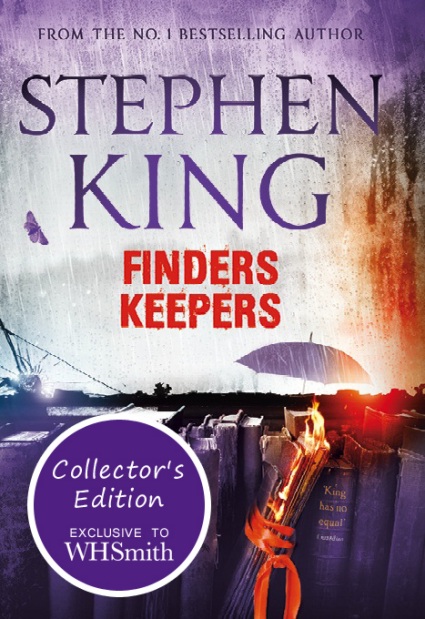
Mr Mercedes & Finders Keepers by Stephen King

For all you haters out there, I’m going to get this first part out of the way. Stephen King, deserves literary recognition of the highest order. Maybe not for his prose, but for pace and story – he is the master. Not to mention the wide range of genres he writes across.


For me,  it’s all about the test of time. And so far so good.


Mr Mercedes

tumblr_n1f260GpMe1rtynt1o3_1280.jpg 51bn5LZ3gcL._SY344_BO1,204,203,200_Anyway, on to Mr Mercedes.  This novel is based around the retired cop, Bill Hodges. I thought that it started off at a slow pace – perhaps that was just my mind frame at the time – and quickly introduced some likable characters.

Bill Hodges has nothing much to do, except sit at home in his la-Z-Boy and watch daytime TV. Until his only unsolved case comes back to haunt him; this enters Hodges into a game of cat and mouse with Brady Hartsfield.

The main villain in this novel, Brady Hartsfield is as sick and twisted as you’d expect from a King novel.  I really felt for King’s villain, while being repulsed at the same time.

Before I knew it, I was struggling to put this novel down and just like that – it was finished.


Pages: 405 (paperback version)

Rating: 7/10


Finders Keepers

Finders Keepers, is the second novel to this trilogy. After finishing Mr Mercedes on paperback, I rushed out 9781473698994_1to by the hardback of this novel.

I think that this second book was better than the first. Brady Hartsfield who was an integral part of Mr Mercedes takes a back seat for most of this book.

It was a great story that went back and forth from 1978 to 2014; which made for an interesting insight into the characters lives and gave the novel great depth.

It centers around a reclusive author – John Rothstein – and his private notebooks that are kept in his safe. These notebooks represent the power of obsession and the tragic consequences it can bring.

Finders Keepers was fast paced, and you get a brilliant surprise in the last few pages; which is going to make for a eerie third novel – I cannot wait to read this.

Unfortunately, I can’t rush out and buy the hardback as it isn’t released yet.

Hurry up Stephen!

Pages: 370 (Hardback version)

Rating: 8/10


Too Many Books, so Little Time.


8297636030_fed35a56ce_o


Okay, so one of my resolutions this year was to read 25+ books. And to help motivate this, I thought I’d set up a book review blog.

Well here it is: Literature Fiend, only seven months late!

As I’m sure you’re all well aware, a thing called life sometimes gets in the way, but alas,  from now on the online journey begins.

I’ve been keeping track of what I’ve read in 2015; so far a total of 11 books. Not great but I’m determined to step it up and review the best on here.

I’ll also be posting articles and all thing relating to Literature and Creative Writing on here, as well as setting up various social media channels (Watch this space)

It’s always interesting to hear opinions on books that you’ve read, or what content you’d like on this site – so get in contact, I’d love to hear from you.

Just finished: Finders Keepers by Stephen King

Currently Reading: Ask the Dust by John Fante


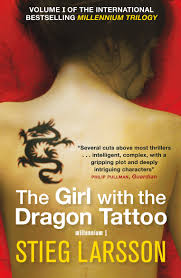
The Girl with the Dragon Tattoo by Stieg Larsson

imgresThis novel was really interesting, and I flew through the first three quarters of the book. The mystery surrounding the disappearance of Harriet Vanger was addictive to read; I couldn’t predict what was coming next.

Brilliant.

However, after the mystery was solved and the novel slowed down my interest began to wane slightly and I struggled to the end.

The death of Larsson is very strange indeed. In the novel the old man Vanger is hospitalised when he suffers a heart attack.

After doing a bit of research on Steig Larsson I discovered that after he’d delivered the millennium trilogy to his publisher, the lift for his office was broken so he had to walk up eight flights of stairs and sadly had a heart attack. What a shame that is; he had planned a few more in the millennium series.

I have the next in the series sitting on my book shelf waiting to be read. I might read a short novel from a different author first just to break things up a bit. First book of the year done; I hope there is many more to follow.

Rating – 8/10

Newer posts »

© 2026 Literature Fiend

Theme by Anders NorénUp ↑